 En
En  Ar
Ar Deadly Pursuit in Lebanon: Journalist Khalil Slain, Rescue Teams Under Fire
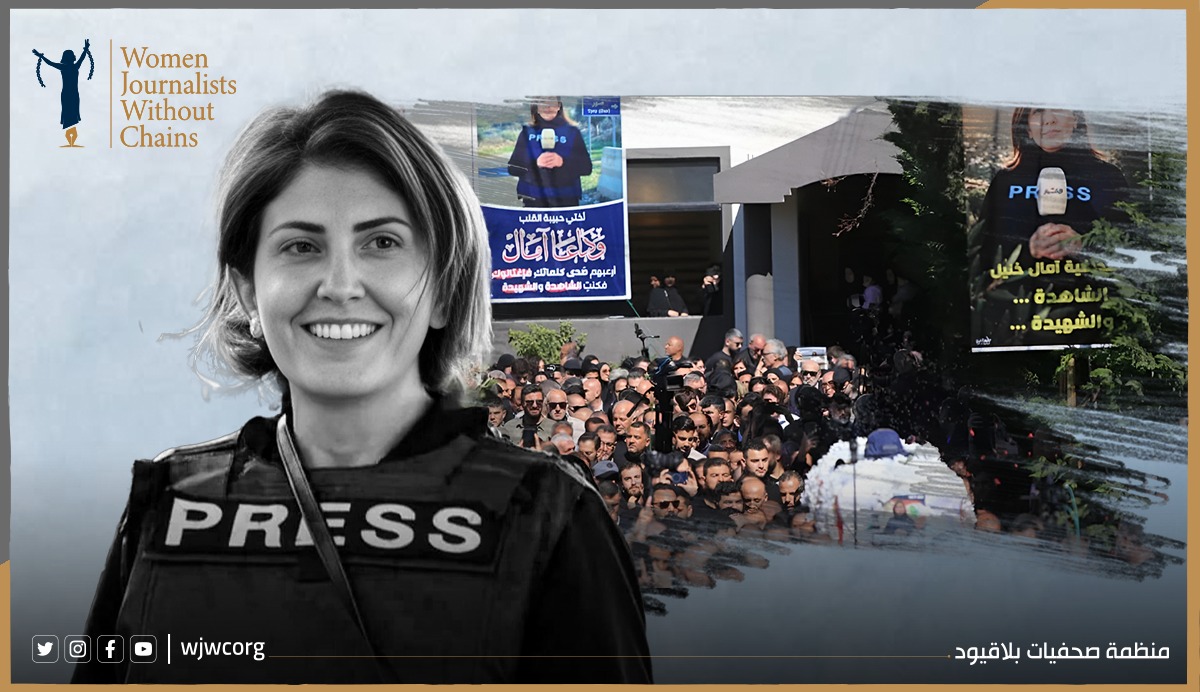
A Lebanese journalist was killed and another injured in a sequence of Israeli attacks that escalated from direct targeting to the obstruction of rescue operations in the town of Al-Tayri, southern Lebanon, on Wednesday, April 22.
The incident began when an Israeli drone struck a vehicle carrying journalists Amal Khalil and Zeinab Faraj as they were carrying out their professional duties. Forced to flee under fire, the two sought refuge inside a nearby residential building. The shelter, however, quickly turned into a target. Moments later, the building itself was bombed, indicating that their location had been tracked and deliberately struck following the initial attack.
What followed deepened the gravity of the incident.
Access to the site was effectively cut off as additional airstrikes targeted the surrounding area, preventing ambulance crews from reaching the injured. Attempts by the Lebanese Red Cross to enter the town were disrupted by renewed strikes aimed at blocking entry routes, leaving the victims without timely medical assistance during the most critical hours.
Rescue teams later succeeded in evacuating two victims from the initial strike, along with the injured journalist Zeinab Faraj. Yet even evacuation efforts came under fire. The ambulance transporting the wounded was directly targeted and sustained multiple bullet impacts, while rescue teams were subjected to further attacks that forced them to withdraw before reaching Amal Khalil, who remained trapped beneath the rubble.
Hours later, after access was finally secured by Lebanese army units and Red Cross teams, search operations led to the recovery of Khalil’s body. Her death was officially confirmed at 11:18 a.m., following a prolonged delay caused by repeated obstruction of rescue efforts.
This sequence—initial targeting, forced displacement, subsequent bombardment, and the systematic denial of rescue—reflects a pattern of conduct that extends beyond a single strike and raises serious concerns regarding the deliberate targeting of journalists and the disruption of life-saving assistance.
Women Journalists Without Chains condemns this attack as a deliberate crime and holds Israel fully responsible for the killing of Amal Khalil and the injury of Zeinab Faraj. The organization affirms that the nature and progression of the attack indicate intentional targeting, particularly in light of prior threats reportedly received by Khalil in connection with her journalistic work.
Beyond the immediate incident, the organization underscores that the attack forms part of a broader and recurring pattern of violations targeting journalists in Lebanon and the occupied Palestinian territories. Since the escalation of hostilities in early March, at least eight journalists have been killed in Lebanon alone, some alongside members of their families.
Recent weeks have witnessed similar attacks, including strikes that killed poet Khatoun Salma and journalists Ghada Daikh and Suzanne Khalil in their homes. Other documented violations include the targeting of journalists while en route to cover events, as well as the bombing of residential buildings that resulted in the deaths of media workers and their relatives—patterns that reflect a systematic escalation disregarding the distinction between civilian and military targets.
The rising toll among journalists mirrors a broader deterioration in the protection of civilians. Since October 2023, hundreds of journalists have been killed across the region, including at least 263 in Gaza, in addition to numerous members of their families.
In Lebanon, available data indicate that at least 20 journalists have been killed and dozens injured, while civilian casualties have surged sharply. Since March alone, more than 2,400 people have reportedly been killed and over one million displaced amid ongoing Israeli military operations.
These developments are inseparable from a wider trajectory of violence. Israeli attacks on Lebanon between 2023 and November 2024 resulted in the deaths of more than 4,000 people and injuries to approximately 17,000, underscoring the fragility of ceasefire arrangements and the persistence of a cycle of escalation and loss.
A Pattern of Violations and Legal Implications
The targeting of journalists while performing their professional duties constitutes a grave violation of international humanitarian law, including the protections afforded under the Geneva Conventions of 1949 and Additional Protocol I of 1977. The obstruction of medical assistance, as well as attacks against ambulances and rescue teams, further violates Common Article 3 and may amount to war crimes under the Rome Statute of the International Criminal Court.
The recurrence of such incidents, coupled with the absence of accountability, reflects a pattern of entrenched impunity that risks normalizing attacks against journalists and civilians alike.
Call for International Action
In light of these violations, Women Journalists Without Chains calls for an independent and transparent international investigation into the killing of Amal Khalil and the broader pattern of attacks targeting journalists.
The organization urges the international community—particularly the United Nations and the Human Rights Council—to take urgent and concrete measures to ensure accountability, provide effective protection for journalists, guarantee their ability to operate without threat, and secure safe and unhindered access for medical and humanitarian teams to the wounded at all times.