 En
En  Ar
Ar 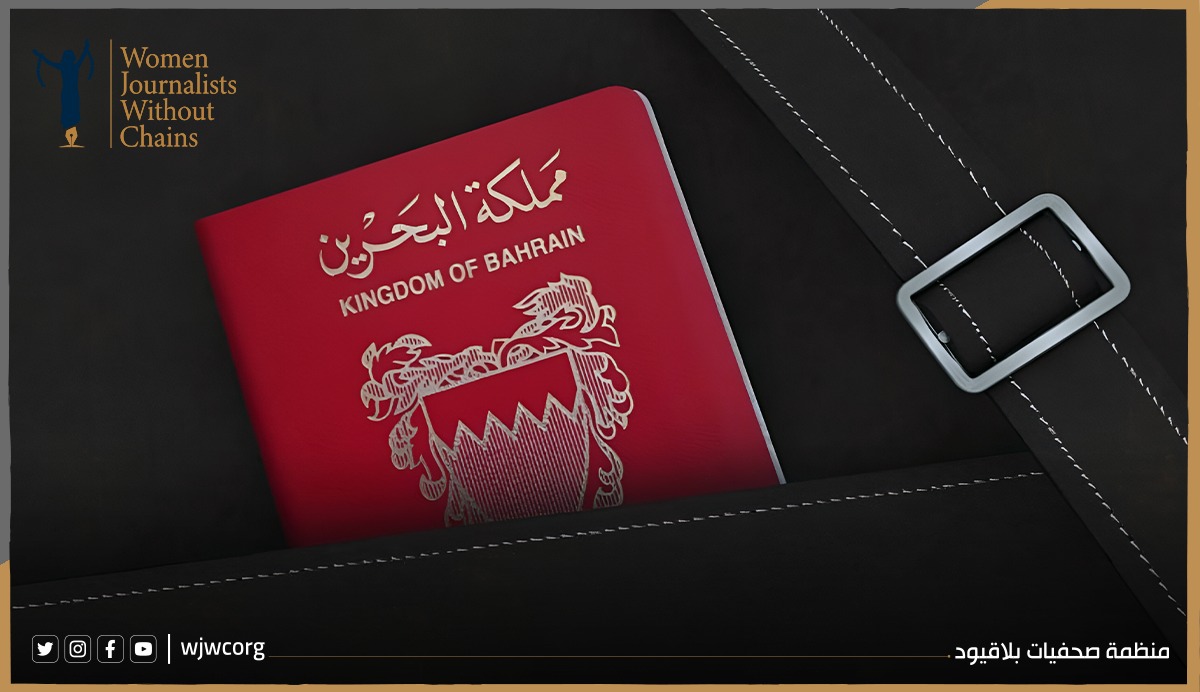
Women Journalists Without Chains strongly condemns the Bahraini authorities' recent decision to revoke the citizenship of 69 individuals and their families.
This sweeping administrative measure—based on vague allegations of "sympathizing with hostile acts" or "collaborating with foreign entities"—represents a grave escalation in the use of nationality as a punitive tool to suppress dissent.
On Monday, April 27, official statements confirmed that these revocations were executed under royal directives and the supervision of the Crown Prince. The move relies on Article 10/3 of the Bahraini Nationality Law, which grants the executive branch broad authority to strip citizenship from anyone deemed to have "harmed the interests of the Kingdom" or "contradicted the duty of loyalty."
A Violation of International Law
Women Journalists Without Chains asserts that weaponizing citizenship to punish political expression or intellectual affiliation is a blatant violation of international human rights law. Article 15 of the Universal Declaration of Human Rights and Article 24 of the Arab Charter on Human Rights stipulate that the right to nationality is an inherent right that cannot be arbitrarily deprived. Furthermore, the International Covenant on Civil and Political Rights (ICCPR) prohibits measures that result in statelessness and the subsequent loss of fundamental civil rights.
By relying on broad terms such as “duty of loyalty,” the authorities have transformed citizenship from a fundamental right into a conditional "gift" subject to political discretion. The government’s assertion that it will continue to "review who deserves the honor of citizenship" signals an alarming intent to expand this campaign of mass revocation.
Key Legal and Human Rights Concerns:
· Collective Punishment: By extending the revocation to hundreds of family members, the authorities are practicing a form of collective punishment. This directly harms women and children—depriving them of identity, education, and healthcare—in violation of the Convention on the Rights of the Child (CRC).
· Erosion of Due Process: These fateful decisions are being made through executive channels without public trials or judicial oversight. This lack of due process allows for the settling of political scores under the guise of "national security."
· The Threat of Statelessness: Forcing citizens into statelessness renders them legally and socially invisible, making them vulnerable to displacement and deprivation of movement and employment, contradicting the 1961 Convention on the Reduction of Statelessness.
Demands for Redress
Women Journalists Without Chains emphasizes that true national stability is achieved through the rule of law, not the stripping of identity. We demand that the Bahraini authorities:
1. Annul all recent revocation decisions immediately and restore citizenship to all affected individuals and their families.
2. Amend the Bahraini Nationality Law to ensure Article 10/3 conforms with international standards of necessity and proportionality.
3. End the practice of collective punishment against the relatives of those accused in political or security-related cases.
Women Journalists Without Chains calls upon the United Nations and the Arab League to intervene urgently to protect Bahraini citizens from policies aimed at stripping them of their national identity. Loyalty must be fostered through inclusive citizenship and respect for pluralism, not through the threat of statelessness.